← Back to Student Projects

Student Activity

School Recycling Drive

Set up safe collection points for recyclable materials, measure participation, and use the results to improve school waste habits.

2 to 4 weeks Class, house team, club, or whole-school project
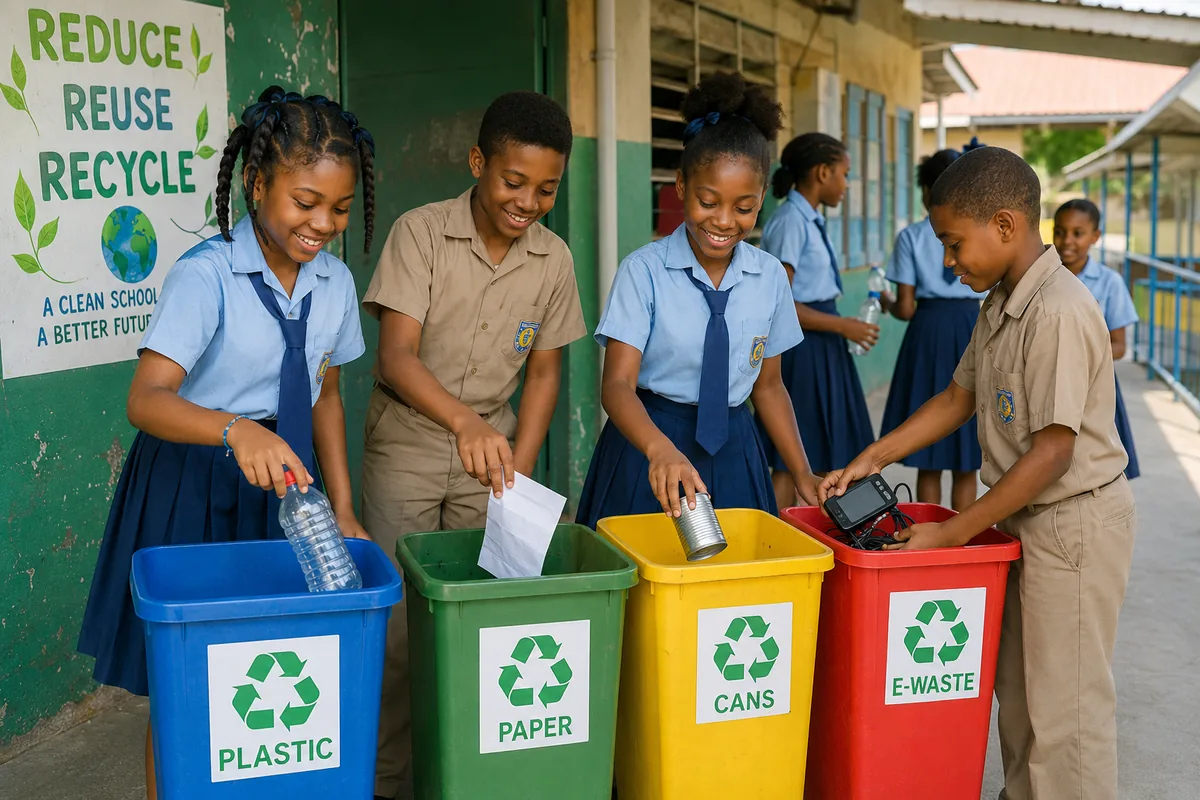
Students sorting bottles, paper, cans, and e-waste for a school recycling drive

SDGs Used

Why this activity supports the Sustainable Development Goals.

Students should understand that the project is not just a task to complete. It connects learning to a real goal, a real school habit, and a real community improvement.

SDG 12

Responsible Consumption and Production

Students sort waste, reduce landfill pressure, and learn that materials can be reused or recycled responsibly.

SDG 17

Partnerships for the Goals

The project can involve school leaders, cleaners, parents, recycling groups, and community partners.

Activity Guide

Step-by-step instructions for students.

Use this as a class project, club activity, homework investigation, or school action challenge. Teachers can shorten or expand it based on age group and available time.

What students will need

  • Clearly labelled bins
  • Gloves
  • Collection log
  • Scale or counting sheet
  • Posters
  • Approved storage area

What to do

  1. Choose one or two material types to collect first, such as plastic bottles, paper, cans, or safe e-waste.
  2. Ask a teacher or school leader to approve the collection locations and storage method.
  3. Create clear labels so students know exactly what belongs in each bin.
  4. Assign teams to check bins on set days and record the amount collected.
  5. Identify common mistakes, such as food waste in recycling bins or mixed materials.
  6. Share weekly results with classes or houses to encourage participation.
  7. At the end, recommend how the school can keep the recycling system active.

What to record

  • Material type
  • Weekly totals
  • Most active classes
  • Contamination or sorting problems
  • Ideas from students and staff

Reflection questions

  • What waste appears most often at school?
  • What made students participate?
  • Who could help the school recycle more consistently?

Final student output

A recycling results chart, bin labels, student posters, and a short recommendation to the school.

Teacher / safety note

Use gloves where needed. Do not handle sharp, dirty, chemical, medical, or unknown waste.

Ready for class

Students can complete this as evidence of action-based learning.

Encourage students to present their findings clearly, explain the SDGs involved, and show what changed because of their work.

View all projects
Important note: Caribbeanexam.com independently supports selected Sustainable Development Goals. This activity does not claim United Nations, CXC, or Ministry endorsement.