AI Predicts
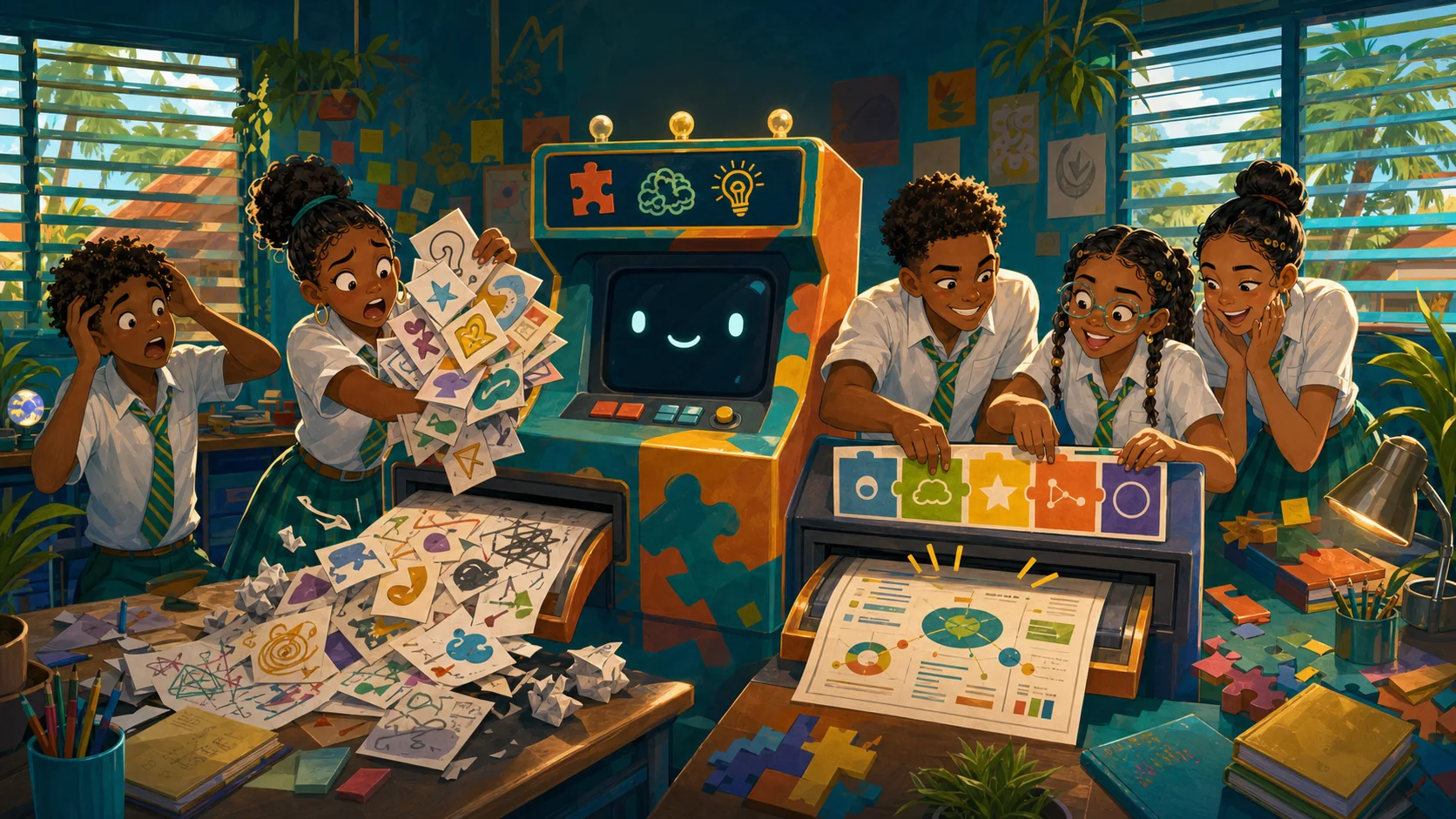
Many AI tools produce likely words, images or answers based on patterns. A confident response is not proof that the response is correct.

AI for Students Resource Centre
Learn how to use artificial intelligence productively, check what it tells you, protect your information, follow school rules, and remain responsible for your own work.
Start Here
Artificial intelligence can recognize patterns and generate responses from data. It can be useful, but it does not automatically know what is true, fair, current or appropriate for your assignment.
Many AI tools produce likely words, images or answers based on patterns. A confident response is not proof that the response is correct.
AI may invent facts, quotations, references, calculations or explanations. These errors are sometimes called hallucinations.
AI responses may repeat unfair assumptions or overlook Caribbean experiences, cultures, language and local context.
You are responsible for what you submit, share or act on, even when an AI system produced part of the answer.
Productive Study
Use AI as a study partner that supports your effort. Do not let it perform all the thinking that you are supposed to practise.
Attempt the task and identify what you understand or need help with.
Request an explanation, example, question or feedback connected to your goal.
Verify important claims using your notes, textbook and trusted sources.
Write, solve and explain the final work using your own understanding.
Disclose AI assistance when your teacher, school or assignment requires it.
Prompting Tutorial
A prompt is the instruction or question you give an AI system. Better prompts explain the learning goal and ask the AI to support your thinking instead of completing the task.
State the subject, topic and your level.
Explain what you want to understand or practise.
Ask for a quiz, steps, comparison, hint or feedback.
Request simple language, no final answer or one step at a time.
Question the response and check important information.
“I am a secondary-school student revising photosynthesis. Ask me five questions from easy to challenging, one at a time. Do not reveal an answer until I respond. Explain any mistake in simple language and tell me what concept to review.”
Follow-up: “Which part of my answer was correct? Give me one hint before showing the complete explanation.”
Accuracy, Bias and Misinformation
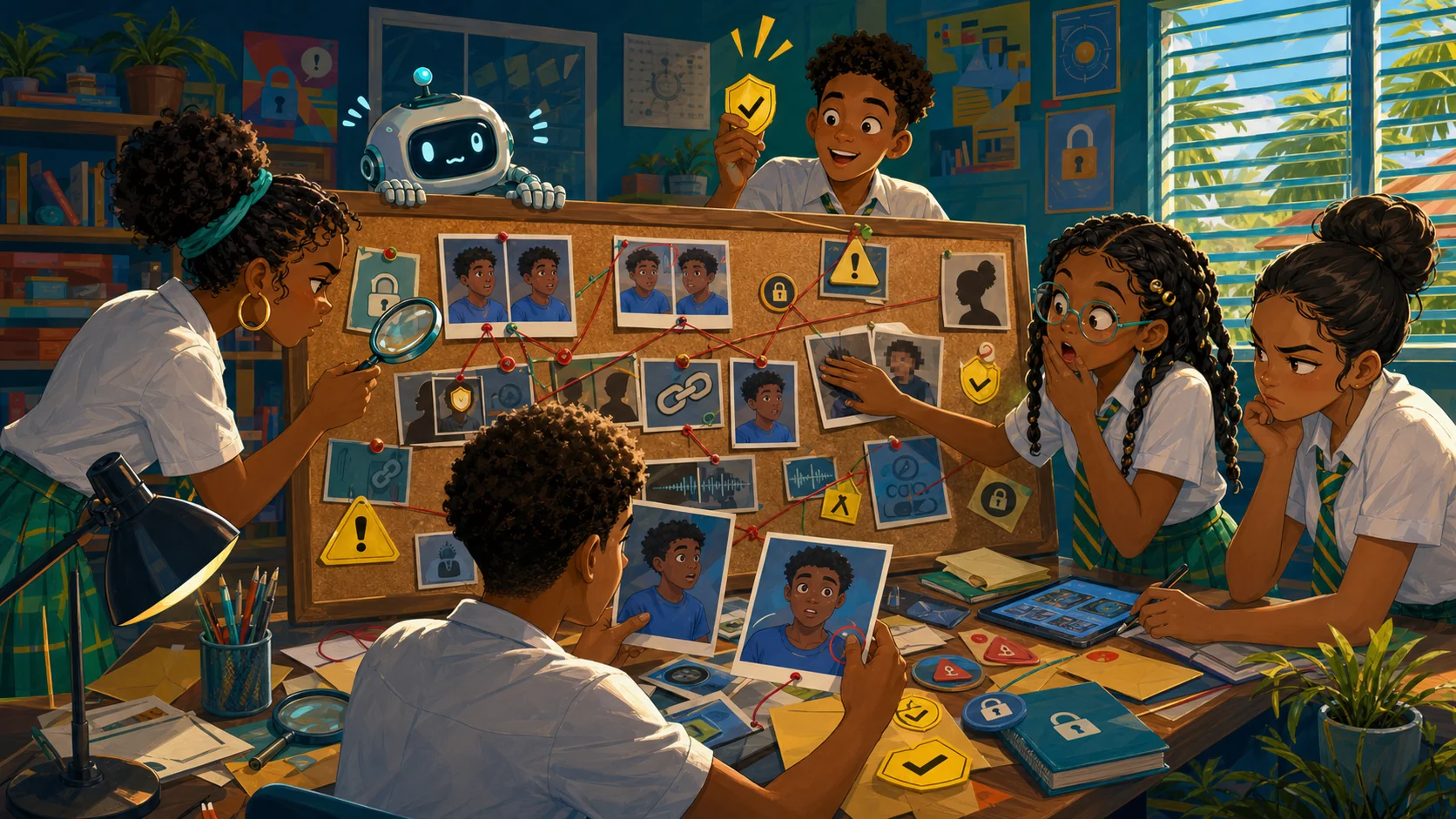
Check information before you learn it, submit it or share it. Extra care is required for health, safety, legal, financial or other high-impact decisions.
What specific fact, quotation, calculation or conclusion needs evidence?
Look for a textbook, teacher-approved source, official organization or original publication.
Do independent reliable sources agree on the important point?
Is the information current, complete and relevant to your country or assignment?
Whose experience is represented, ignored or described unfairly?
Practical Activity
Do not use a fabricated citation simply because it looks realistic. Open and verify every source before including it.
Academic Honesty
Different teachers and schools may have different AI rules. Ask before using AI on assessed work and follow the instructions given for that assignment.
“I used [name of tool] to help me [describe the permitted task]. I checked the response using [sources or method], and I created and reviewed the final work myself.”
Privacy, Security and Digital Citizenship
Anything entered into an online AI service may be stored or processed. Treat every prompt, upload and generated file as a digital-safety decision.
Student and Classroom Activities
These activities can be completed individually, in class or through a supervised club. An AI account is not required for every activity.
Review a sample AI answer containing three planted mistakes. Identify each error and explain how you verified it.
Output: corrected answer with sources.Improve a vague prompt through three versions by adding context, a learning goal, limits and a checking request.
Output: three prompts and a comparison.Select one claim and compare it with two reliable independent sources. Record agreement, differences and missing context.
Output: short verification table.Write personal rules explaining when you will use AI, when you will ask permission and what information you will never share.
Output: one-page responsible-use plan.How can AI support your learning without removing the useful struggle of thinking?
What will you do the next time an AI answer sounds convincing but provides no evidence?
How would you explain your AI use honestly to a teacher?
Which personal information will you never enter into an AI tool?