← Back to Student Projects

Student Activity

Local Environmental Research

Investigate a nearby environmental issue using observations, interviews, photos, maps, and evidence-based recommendations.

2 to 4 weeks Research group or class project
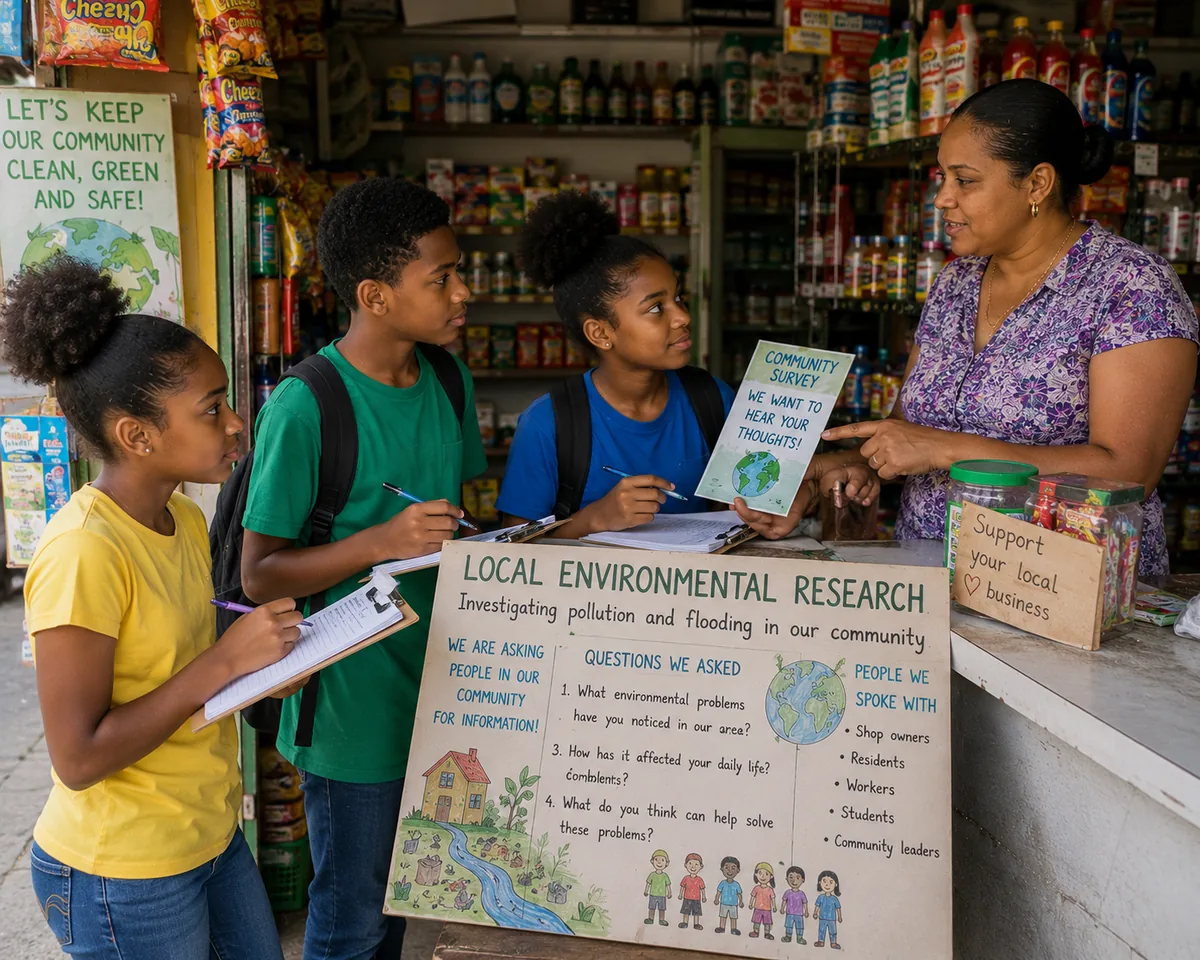
Students interviewing a community member for local environmental research

SDGs Used

Why this activity supports the Sustainable Development Goals.

Students should understand that the project is not just a task to complete. It connects learning to a real goal, a real school habit, and a real community improvement.

SDG 4

Quality Education

Students practise research, questioning, evidence gathering, analysis, and presentation skills.

SDG 13

Climate Action

Students study environmental risks and recommend local action.

SDG 17

Partnerships for the Goals

Students can learn from residents, businesses, community leaders, teachers, and local groups.

Activity Guide

Step-by-step instructions for students.

Use this as a class project, club activity, homework investigation, or school action challenge. Teachers can shorten or expand it based on age group and available time.

What students will need

  • Research question
  • Notebook or form
  • Map or sketch
  • Camera with permission
  • Interview questions
  • Presentation materials

What to do

  1. Choose one nearby issue: flooding, heat, erosion, waste disposal, pollution, habitat loss, or water shortage.
  2. Write a research question that students can answer with observations, photos, simple maps, or interviews.
  3. Create a short interview guide with respectful, clear questions.
  4. Collect evidence from safe, approved locations.
  5. Organize findings into causes, effects, and possible solutions.
  6. Compare student observations with what community members said.
  7. Present recommendations to a class, club, school leader, or community partner.

What to record

  • Research question
  • Observation notes
  • Photos or sketches
  • Interview responses
  • Map or location notes
  • Suggested action

Reflection questions

  • What evidence was strongest?
  • Who needs to help solve the problem?
  • What action would make the biggest difference?

Final student output

A research poster, slideshow, written report, or community presentation with findings and recommendations.

Teacher / safety note

Students should work in supervised groups, avoid unsafe locations, and get permission before taking photos or interviews.

Ready for class

Students can complete this as evidence of action-based learning.

Encourage students to present their findings clearly, explain the SDGs involved, and show what changed because of their work.

View all projects
Important note: Caribbeanexam.com independently supports selected Sustainable Development Goals. This activity does not claim United Nations, CXC, or Ministry endorsement.